Heating Repair - Smyrna, TN
Heating Repair in Smyrna, TN
Your heat is out on a cold Middle Tennessee night. We test first, explain in plain words, and quote a straight price before any work starts.
Schedule Service - (615) 436-9171
Upfront pricing - 24/7 Emergency - Serving Smyrna and Rutherford County
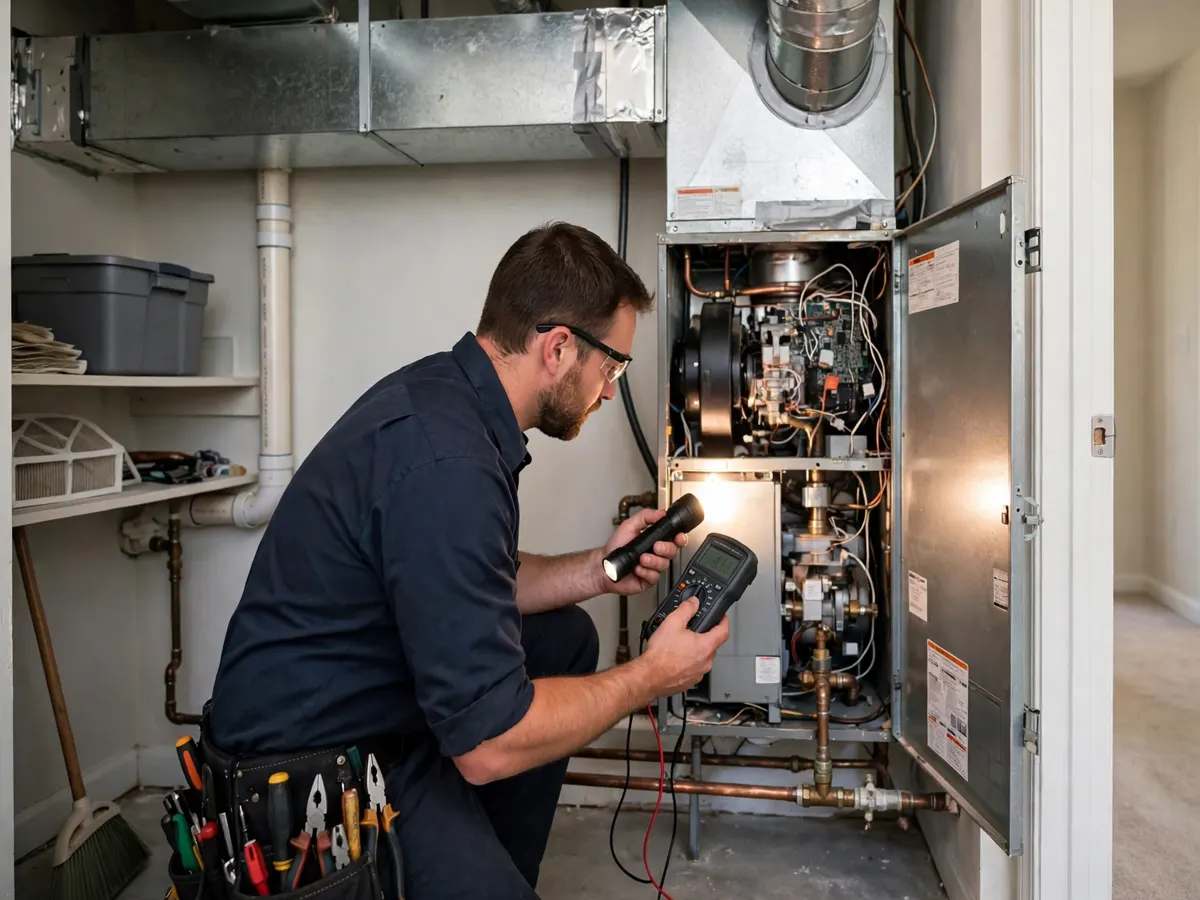
Direct answer: Heating repair is the triage page of this site, because a cold house in Smyrna can mean a gas furnace, a heat pump, or electric strips, and the first job is working out which system you have and where it stopped. When we get a call about no heat, we ask three questions on the phone: what does the thermostat say, is air moving, and is the air cold or just absent? Those answers sort most calls before the truck rolls.
Signs You Need Heating Repair
- No heat at all from any vent
- Air blows but it is cold or barely warm
- Heat starts, runs a few minutes, then quits
- Burning or musty smell when the heat runs
- Thermostat blank or system will not respond
Safe check first: confirm the thermostat is set to heat and a few degrees above room temperature, and check the filter. If you smell gas strongly, leave the house and call the gas utility or 911 from outside. A faint dusty smell at first startup of the season is common and usually clears in minutes.
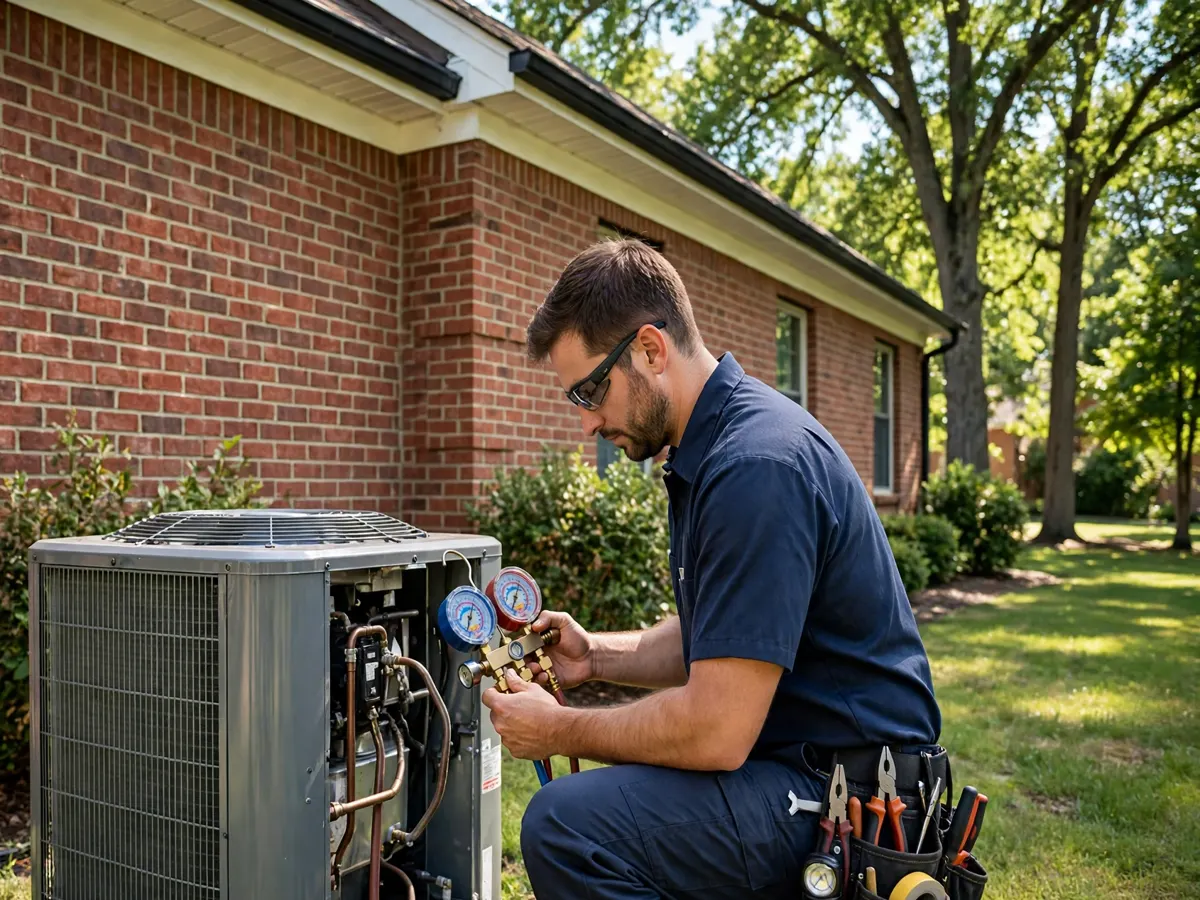
How We Fix It
Ignition or flame sensor fault on gas systems
Clean or replace the sensor, test ignition sequence end to end.
Heat pump stuck or low on charge
Test mode, charge and defrost cycle, repair the failed part.
Failed blower motor or capacitor
Test motor and start parts, replace what has failed.
Common Causes We Test For
| Cause | What you notice | How it is fixed |
|---|---|---|
| Ignition or flame sensor fault on gas systems | Burner tries to light, then locks out | Clean or replace the sensor, test ignition sequence end to end |
| Heat pump stuck or low on charge | Outdoor unit runs but indoor air stays cool | Test mode, charge and defrost cycle, repair the failed part |
| Failed blower motor or capacitor | Little or no air from the vents | Test motor and start parts, replace what has failed |
| Tripped safety or limit switch | System shuts down mid-cycle and restarts later | Find the overheating or rollout cause, never just bypass the safety |
Heating Repair in Smyrna: Notes From the Field
Ask any technician what heating repair teaches you and they will say patience. The loud clue, no heat at all from any vent, is not always the root. Sometimes the root is the tripped safety or limit switch, quietly producing thermostat blank or system will not respond while the owner watches the wrong end of the system. Near Lee Victory Recreation Park we once traced a week of complaints back to exactly that kind of hidden cause, which is why this page lists four causes instead of the usual three.
Prevention, for this equipment, is unglamorous and effective. Safe check first: confirm the thermostat is set to heat and a few degrees above room temperature, and check the filter. If you smell gas strongly, leave the house and call the gas utility or 911 from outside. A faint dusty smell at first startup of the season is common and usually clears in minutes. Add one more habit: write the model and serial numbers in a notebook the day you move in. When air blows but it is cold or barely warm shows up at 9PM, those numbers are the difference between a prepared visit and a parts hunt.
Geography counts too. The stretch between TriStar StoneCrest Medical Center and the county line mixes older houses, rental homes and fresh subdivisions, and heating repair calls from each look different. Older houses bring worn originals and tired ductwork. Rentals bring deferred maintenance. New builds bring matched systems aging in lockstep. Knowing which street pattern a call comes from shapes the first three questions we ask.
Which Heating System Is Actually in Your House?
Smyrna homeowners often book a furnace call for a house that has no furnace. Knowing what you own speeds everything up, so here is the two-minute identification tour we wish every caller took before dialing. Start outside. If a big outdoor unit runs on cold days, humming away while it makes heat, you own a heat pump, possibly with a furnace partner indoors. If the yard stays silent all winter and heat simply appears at the vents, the work is happening indoors, at a furnace or an electric air handler.
Now look at the indoor equipment, usually in a closet, garage corner or attic. A gas furnace gives itself away three ways: a metal flue pipe rising from the top to carry exhaust out, a yellow-flex or black-iron gas line entering the side, and supply air at the vents that feels genuinely hot, hotter than body temperature by a wide margin. You may also spot a small sight glass showing a blue burner flame when it runs. An electric air handler has no flue and no gas line. Instead it hides banks of resistance strips behind the blower, fed by some of the fattest breakers in your panel, and its vent air feels warm rather than hot.
Why does this tour matter for a repair bill? Because the parts catalogs share almost nothing. The gas unit fails at igniters, flame sensors, inducer motors and gas valves. The electric unit fails at sequencers, strip elements and blower boards. The heat pump fails outdoors, at defrost controls and reversing valves. Telling us on the phone which of the three you own, and whether the vent air felt hot, warm or cold, lets the truck arrive carrying the right family of parts instead of a generic guess.
The Phone Triage We Run Before Any No-Heat Visit
Half of good heating repair happens before the truck leaves Lowry Street, in a three-minute phone conversation that sorts the call into one of four buckets. Bucket one is power: a tripped breaker, a furnace switch a child flipped, a thermostat with dead batteries showing a brave face. Bucket two is air: a filter so loaded the system overheated and locked itself out for safety. Bucket three is fuel: a gas valve closed during a summer project and never reopened, or an empty propane tank on the rural edge of town. Bucket four is the honest remainder, a part that genuinely failed and needs a meter, not a pep talk.
The questions sound almost too simple. What does the thermostat screen say right now, word for word? Is any air moving at the strongest vent in the house? When did the house last feel normally warm, and did anything change that day, a filter swap, a power blink, work in the attic? Did you hear the system try, click, hum, roar briefly, or has it been silent the whole time? Each answer deletes a branch of the fault tree, which is why a caller who has walked to the unit and looked beats a caller guessing from the couch.
There is one more bucket we screen for on every winter call, and it outranks the other four: people. A caller who mentions a baby, a grandparent, a home oxygen machine, or a house already below 55 degrees changes the priority of the run and sometimes the advice. Run the faucets at a drip, open the cabinets under the sinks, gather everyone into one room with the oven off and the space heater watched. Comfort can wait a few hours. Pipes and people cannot, and any heating company that treats a freezing house with a newborn like a routine ticket has its priorities upside down.
The Carbon Monoxide Conversation We Have Every Winter
Any fuel-burning heater can, in the wrong conditions, produce carbon monoxide, an odorless gas that earns respect in every training manual for good reason. The wrong conditions have familiar shapes: a blocked flue, a cracked exchanger, a furnace room sealed tight during a remodel so the burner starves for combustion air and backdrafts exhaust down the vent instead of up it. Smyrna's older housing stock near the Depot District, with chimneys relined, capped or shared across decades of equipment changes, gets this lecture from us in person, not as a scare tactic but because the checks are cheap and the stakes are not.
Your side of the bargain is detection. Alarms belong on every level of the home and outside sleeping rooms, replaced on the schedule printed on the unit, and treated as a fire alarm when they sound: out first, call from the yard, let the fire department meter the house before anyone troubleshoots a furnace. Headache, dizziness and nausea that fade outdoors and return indoors are a pattern worth naming to the dispatcher. Our side is combustion testing at every heating visit: draft readings, flame inspection, and a genuine look at the vent path from burner to sky, because a furnace that heats beautifully can still vent badly.
Why Smyrna Homeowners Choose Us for Heating Repair
Tested, not guessed
For heating repair, we prove the fault, often a failed blower motor or capacitor or ignition or flame sensor fault on gas systems, with readings before we quote a part.
Brands covered
Carrier, Trane, Lennox, Goodman, Rheem and the rest of our brands strip below all show up in Smyrna heating repair work.
Repair or replace honesty
If heat starts, runs a few minutes, then quits turns out to be the end of this system rather than a repair, we show you that math and let you decide.
Brands We Service
We Service All Major HVAC Brands
- Carrier
- Trane
- Lennox
- Goodman
- Rheem
- York
- Amana
- Bryant
- Daikin
- Mitsubishi Electric
- American Standard
- Ruud
Do not see your brand? We work on all makes and models found in Smyrna homes. Call (615) 436-9171 and tell us the brand and model number.
Repair or Replace? A Quick Guide
| Factor | Leans repair | Leans replace |
|---|---|---|
| Age | First half of expected life | Near or past expected life |
| Fault | One tested, replaceable part | Several worn systems at once |
| Cost | Well under half of new | Over half of a comparable new system |
Our HVAC cost guide shows typical ranges for Smyrna jobs, qualified the way honest ranges should be.
Areas We Serve for Heating Repair
Related Services
Helpful Reading
Reference: Rutherford County, TN - official site
Frequently Asked Questions
Why is my heater blowing cold air?
On a gas furnace it often means the burner never lit or a sensor shut it down. On a heat pump it can mean the unit is in a defrost cycle, which is normal for a few minutes, or that the auxiliary heat is not coming on. How long the cold air lasts tells us which story it is.
What is auxiliary or emergency heat?
Heat pumps pull heat from outdoor air. When it gets very cold, electric strips or a gas furnace back them up. That backup is auxiliary heat. Emergency heat is a manual setting that runs only the backup. Our blog explains when to use emergency heat and when to leave it alone.
My heat keeps shutting off after a few minutes. Why?
Short cycling on heat usually means overheating from poor airflow, a dirty flame sensor dropping the burner, or a control protecting the system. It is a symptom with a cause, and the cause is what we test for.
Is a heating repair an emergency in Smyrna?
It can be. Overnight lows in Rutherford County drop below freezing for stretches each winter, and a house with no heat risks frozen pipes plus real discomfort for kids, older folks and anyone medically vulnerable. Our emergency line is answered 24/7.
Do you repair both gas and electric heat?
Yes. Gas furnaces, heat pumps, dual-fuel systems and electric air handlers all show up in Smyrna homes, and we test each on its own terms.