Furnace Repair - Smyrna, TN
Furnace Repair in Smyrna, TN
Your furnace lights, quits, or never lights at all. We test first, explain in plain words, and quote a straight price before any work starts.
Schedule Service - (615) 436-9171
Upfront pricing - 24/7 Emergency - Serving Smyrna and Rutherford County
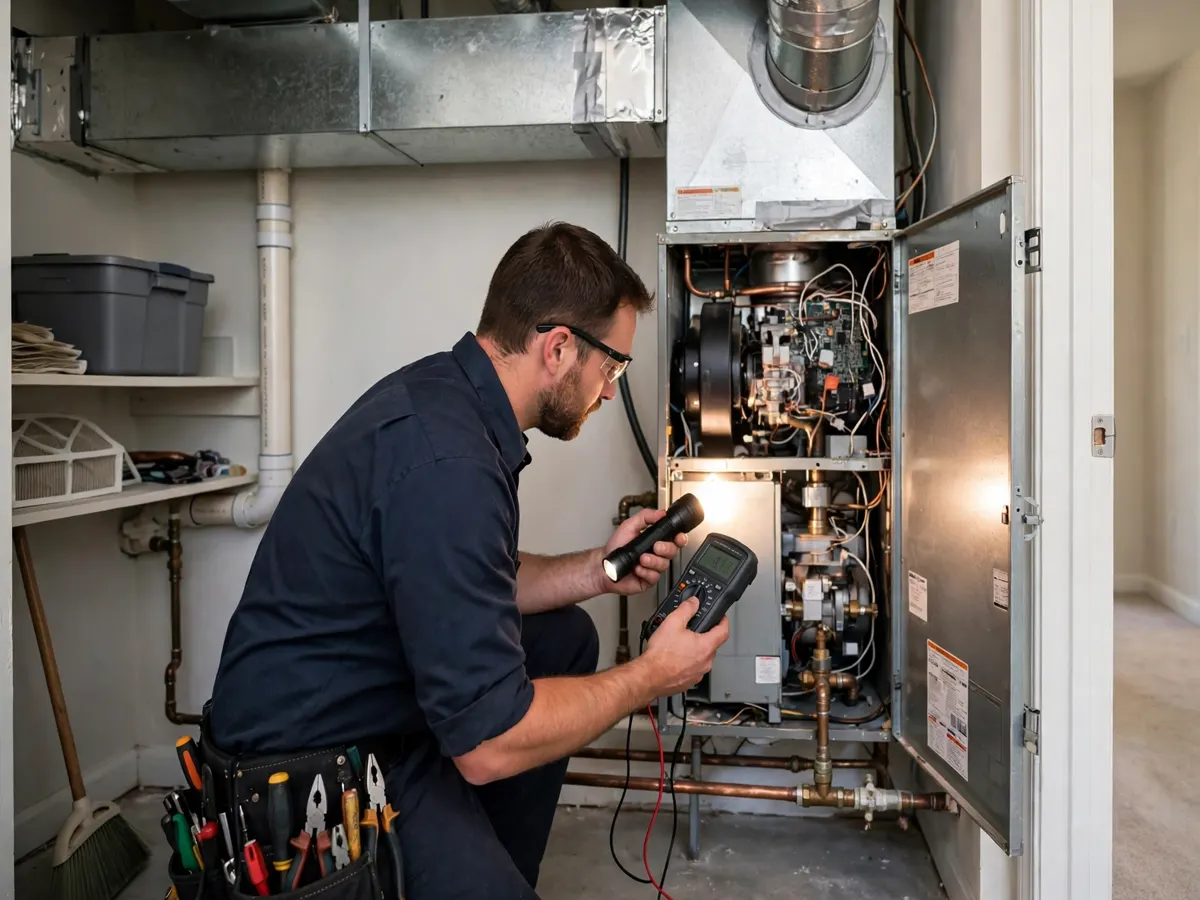
Direct answer: Furnace calls in Smyrna follow a pattern we could set a watch by: the first cold snap in November finds every weak igniter and dirty flame sensor in Rutherford County at once. When we get a call about a furnace that will not stay lit, we work the sequence in order, ignition, flame proving, blower, limits, because a furnace is a chain and the repair is whichever link actually broke.
Signs You Need Furnace Repair
- Furnace starts then shuts off within minutes
- No ignition, just a clicking or humming unit
- Blower runs but only cold air comes out
- Loud bang or rumble at startup
- Yellow or lazy flame instead of steady blue
Safe check first: look at the flame through the sight glass if your furnace has one. A steady blue flame is healthy. A yellow, waving flame is a reason to shut the system down and call. And if the carbon monoxide alarm sounds, get out first and call from outside, every time.
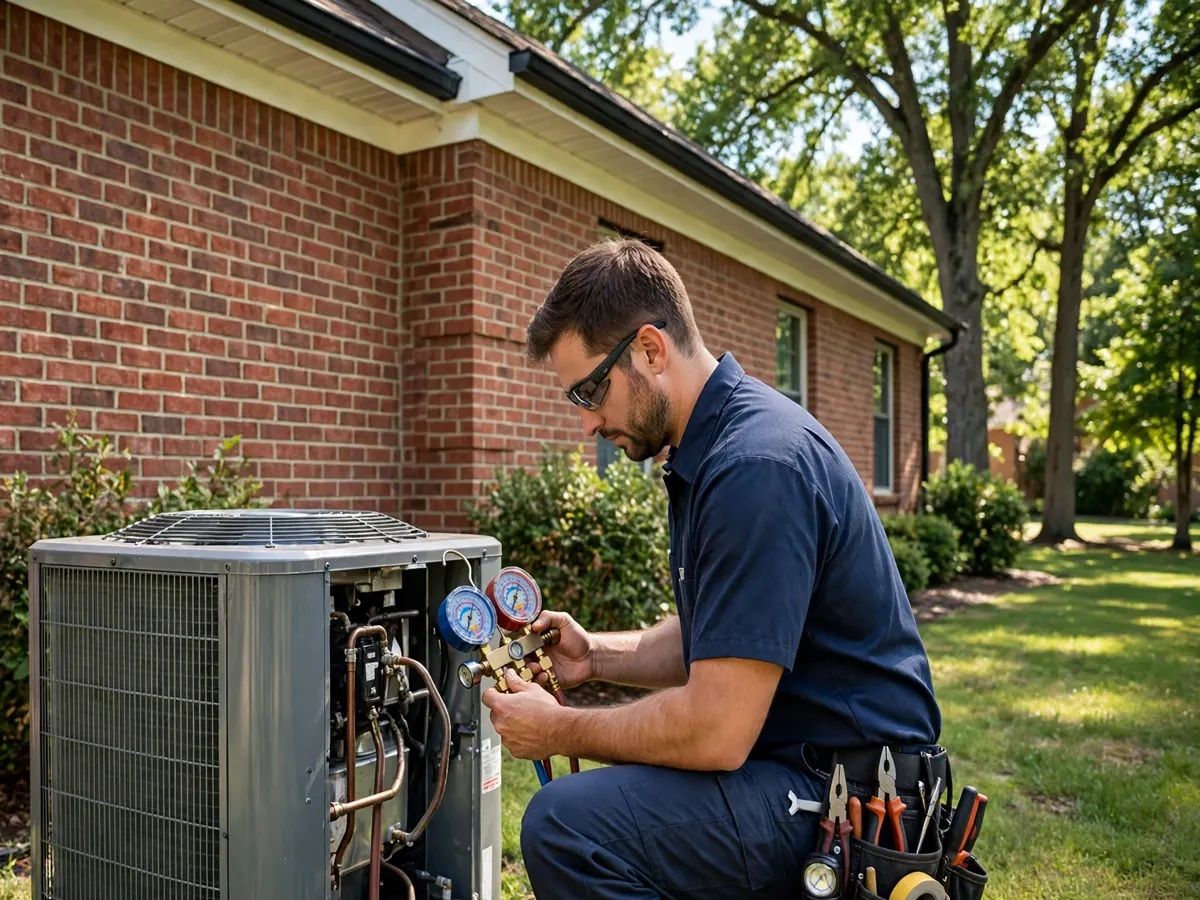
How We Fix It
Dirty flame sensor
Clean or replace the sensor and verify the flame signal in microamps.
Failed hot surface igniter
Test igniter resistance and replace with the correct part.
Cracked or weak inducer motor
Test inducer draw and pressure switch operation.
Common Causes We Test For
| Cause | What you notice | How it is fixed |
|---|---|---|
| Dirty flame sensor | Burner lights for seconds, then drops out | Clean or replace the sensor and verify the flame signal in microamps |
| Failed hot surface igniter | No glow, no ignition, furnace locks out | Test igniter resistance and replace with the correct part |
| Cracked or weak inducer motor | Rattling pre-purge, pressure switch never closes | Test inducer draw and pressure switch operation |
| Overheating from restricted airflow | Furnace runs hot, trips the limit, restarts later | Correct the filter, blower or duct restriction causing the heat buildup |
Furnace Repair in Smyrna: Notes From the Field
Picture the usual furnace repair call near Smyrna Outdoor Adventure Center. The homeowner noticed loud bang or rumble at startup first, then yellow or lazy flame instead of steady blue, and by the time we arrived the pattern pointed at the overheating from restricted airflow. That fourth cause is the one owners rarely suspect, because it hides behind the louder symptoms. We test it directly, show the reading, and only then talk about parts. If the overheating from restricted airflow tests fine, we move on without charging you for a guess.
There is also a habit side to furnace repair in Smyrna. Safe check first: look at the flame through the sight glass if your furnace has one. A steady blue flame is healthy. A yellow, waving flame is a reason to shut the system down and call. And if the carbon monoxide alarm sounds, get out first and call from outside, every time. Owners who run that check monthly catch the dirty flame sensor while it is still a cleaning job rather than a repair bill. Owners who skip it tend to meet us on a Saturday in July, when the problem has had weeks to grow teeth.
One more local wrinkle: homes within earshot of Smyrna Greenway and Espey Trailhead sit in some of the most lived-in streets in 37167, and their systems work accordingly. A family house near the parks runs its heating and cooling harder by Tuesday than a quiet household runs all week. Wear follows use, so on furnace repair we always ask how the system actually lives, not just what it is doing wrong today.
Anatomy of a Safe Furnace Startup
A modern gas furnace is less a fire in a box than a checklist performed in order, dozens of times a day, and furnace repair is mostly finding which step of the checklist the machine has started refusing. The thermostat calls. The control board first proves the vent path is clear by spinning the inducer, a small fan that pulls exhaust through the heat exchanger and out the flue. A pressure switch watches that draft and closes only when the pull is strong enough. No draft, no permission to continue. That single interlock explains a whole family of winter no-starts, from blocked vent pipes to birds nesting in a flue cap over summer.
With draft proven, the igniter heats until it glows orange, the gas valve opens, and burners light across the crossover channels with a soft whoomp. A flame sensor rod sits in that flame and generates a tiny electrical current, measured in microamps, that tells the board the fire is real. Weak current from a oxidized rod is the number one reason Smyrna furnaces light beautifully and then quit eight seconds later. Only after the exchanger warms does the blower start, pushing air that first feels cool, then hot, across a limit switch that stands guard against overheating the whole sequence.
High-efficiency condensing models add plumbing to the choreography. These furnaces wring so much heat from the exhaust that water condenses out of it, drains through a trap, and leaves through a PVC vent instead of a metal flue. A clogged trap or a sagging condensate line can stop a furnace as dead as any electrical fault, usually on the coldest night, because that is when it runs longest and makes the most water. When a furnace locks out, the board blinks a code through a sight glass. Counting those blinks before you reset anything is the single most useful thing a homeowner can do for the repair that follows.
Reading a Heat Exchanger Like a Story
The heat exchanger is the furnace part with the highest stakes, a set of metal tubes or plates that keep flame gases on one side and house air on the other. Inspecting one is part optics, part detective work. A camera snake shows us the interior surfaces. Flame behavior under blower startup tells its own tale: a healthy flame stands still when the blower kicks on, while a cracked exchanger often makes flames waver or roll as house air pushes through the breach. Rust streaks, soot patterns at the burner mouth, and repeated rollout switch trips all get read as chapters of the same story.
Homeowners deserve honesty about the limits here. A camera can miss a hairline crack that only opens at full temperature, which is why combustion analysis, measuring what actually leaves the flue, backs up the visual check on any furnace old enough to worry us. When both witnesses agree the exchanger is sound, we say so and move on to cheaper suspects. When either one objects, the furnace stays off and the conversation turns to replacement, with the readings on paper in front of you. Nobody should have to take a five-figure decision on a technician's say-so, and in this house, nobody does.
Why Smyrna Homeowners Choose Us for Furnace Repair
Tested, not guessed
For furnace repair, we prove the fault, often a cracked or weak inducer motor or dirty flame sensor, with readings before we quote a part.
Brands covered
Carrier, Trane, Lennox, Goodman, Rheem and the rest of our brands strip below all show up in Smyrna furnace repair work.
Repair or replace honesty
If blower runs but only cold air comes out turns out to be the end of this system rather than a repair, we show you that math and let you decide.
Brands We Service
We Service All Major HVAC Brands
- Carrier
- Trane
- Lennox
- Goodman
- Rheem
- York
- Amana
- Bryant
- Daikin
- Mitsubishi Electric
- American Standard
- Ruud
Do not see your brand? We work on all makes and models found in Smyrna homes. Call (615) 436-9171 and tell us the brand and model number.
Repair or Replace? A Quick Guide
| Factor | Leans repair | Leans replace |
|---|---|---|
| Age | First half of expected life | Near or past expected life |
| Fault | One tested, replaceable part | Several worn systems at once |
| Cost | Well under half of new | Over half of a comparable new system |
Our HVAC cost guide shows typical ranges for Smyrna jobs, qualified the way honest ranges should be.
Areas We Serve for Furnace Repair
Related Services
Helpful Reading
Reference: TVA EnergyRight - home energy programs
Frequently Asked Questions
Why does my furnace start and then stop?
The most common cause is a flame sensor that can no longer prove the flame, so the control shuts the gas off as a safety step. Dirty sensors cause exactly this pattern. Limit trips from overheating and pressure switch faults can look similar, which is why we test the sequence rather than swap parts.
How long should a furnace last in Middle Tennessee?
Many gas furnaces serve 15 to 20 years with maintenance. Smyrna units that heat a home plus a bonus room over the garage work harder than average. Age plus repair history is what we weigh when a big part fails.
Is a cracked heat exchanger always a replacement?
A confirmed crack means the furnace should not run, because exhaust gases can enter the air stream. On an older furnace that usually means replacement. We show you the evidence, with a camera or combustion readings, before that conversation.
Why is my furnace so loud this year?
New noises have specific sources: an inducer bearing going dry, a blower wheel out of balance, or duct metal popping as it heats. Tell us when the noise happens in the cycle and we will know where to start.
Can you repair my furnace the same visit?
Igniters, flame sensors, capacitors and many motors are truck-stock parts for common Carrier, Trane, Goodman and Rheem models. Share your model number when you call and we will try to arrive with the likely part.